

Launch
OpenCode, Qwen Code, and Cline are now live on HarnessRouter
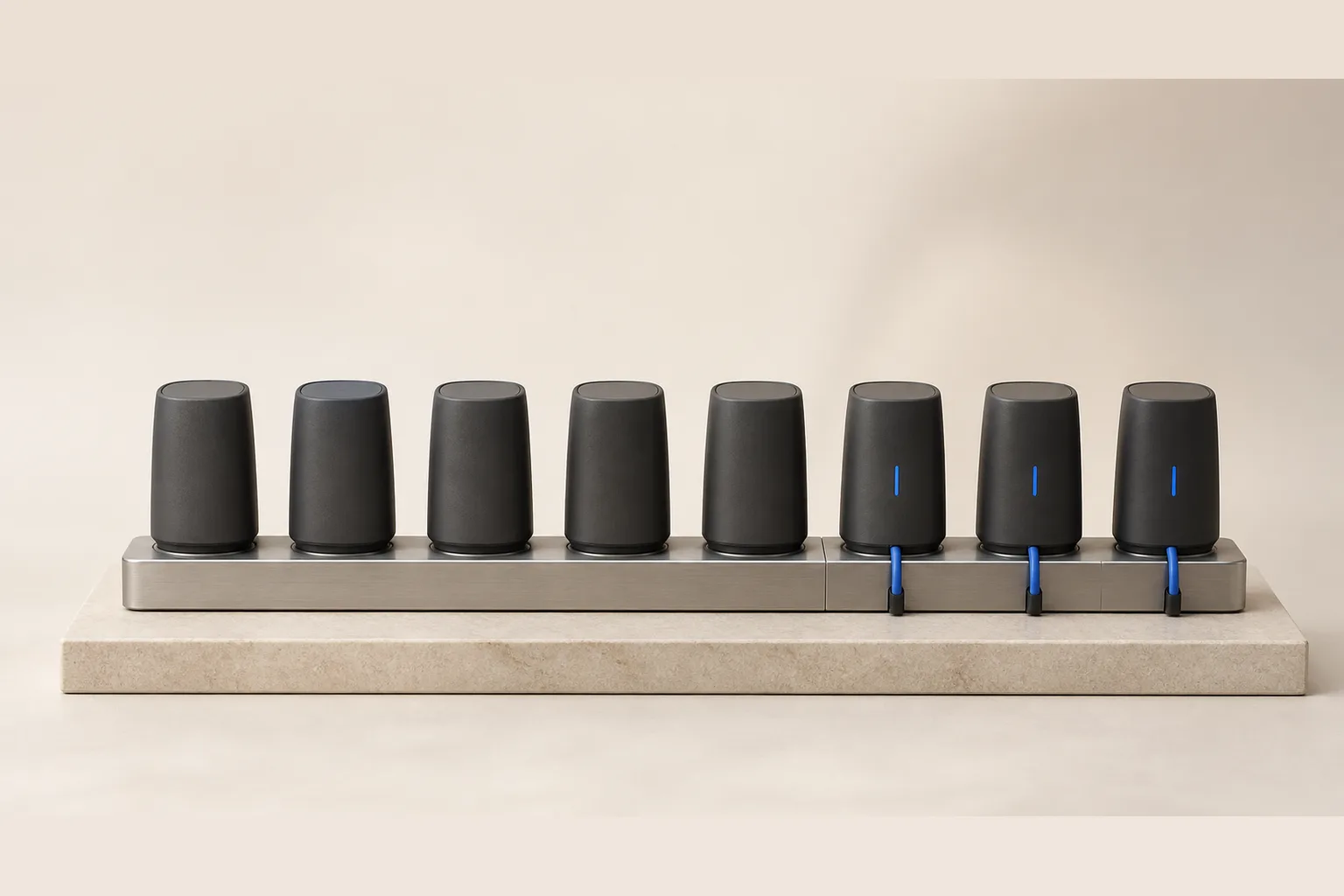
Following Codex, Claude Code, Hermes, Pi, and DeepSeek Harness, HarnessRouter now runs eight agent harnesses through one interface. OpenCode, Qwen Code, and Cline are supported today.
HarnessRouter is the world's first unified interface for agent harnesses: one managed API that lets a product run, trace, and compare multiple agent harnesses without owning the runtime underneath. Today that interface supports eight harnesses instead of five.
OpenCode, Qwen Code, and Cline each built a large open-source community as a coding agent in its own right. Developers already know what these harnesses can do; running them behind a product, server-side, without owning their runtimes, is the piece this release adds.
More harnesses. One protocol. One API. The three new harnesses use the same create-and-run contract as the five already supported, so nothing about your integration changes when you add them.
Supported harnesses
Eight agent harnesses, one API contract
Each harness keeps its own runtime license and model coverage. HarnessRouter gives all eight the same interface.
Two axes matter when you pick a harness: whether its runtime is open source, and whether it can run every model family or only its vendor's own models. Here is where the eight stand today.
- Codex (base id codex): open source runtime, Apache-2.0. Through HarnessRouter it runs OpenAI models.
- Claude Code (base id claude-code): proprietary runtime under Anthropic's terms. Through HarnessRouter it runs Claude models.
- Hermes (base id hermes): from Nous Research, with no declared license. Runs all model families.
- Pi (base id pi): open source runtime, MIT, from earendil-works. Runs all model families.
- DeepSeek Harness (base id dsh): open source runtime, MIT, developer preview, version-pinned. Runs all model families, with DeepSeek models as the default.
- OpenCode (base id opencode): open source runtime, MIT, from anomalyco. Runs all model families. New today.
- Qwen Code (base id qwen): open source runtime, Apache-2.0, from Alibaba's Qwen team. Runs all model families. New today.
- Cline (base id cline): open source runtime, Apache-2.0, from Cline Bot Inc. Runs all model families. New today.
License here means the harness runtime's own license, not the model it calls: the Codex CLI is Apache-2.0 and still calls OpenAI's models. Model families are the ones offered through HarnessRouter today, which you can list per harness at GET /v1/harnesses/{id}/models. For the three new harnesses, that catalog is trimmed to what a live verification sweep on the deployed stack confirmed, so what the models endpoint lists is what runs.
One contract
Call every harness the same way
You create a harness once, then run it. To create, POST to /v1/harnesses with a base, which is where the new ids come in: base opencode for OpenCode, base qwen for Qwen Code, base cline for Cline. You can also set a name, a model, a system prompt, MCP servers, and skills.
To run, POST to /{harness_id}/v1/responses with your input, and send an Idempotency-Key on the first request so a retry never starts the work twice. The response streams task, run, session, file, and artifact events your product can render directly.
This is the same contract the other five harnesses already use. Switching a task from one harness to another is a change of base and model, not a rewrite. The full create-and-run reference lives in the AGENTS.md document for each harness.
New
OpenCode: a provider-agnostic open source agent
OpenCode is an open source agent harness from anomalyco, MIT licensed, built as a terminal-based, provider-agnostic coding agent upstream. HarnessRouter runs it headlessly in a per-run sandbox behind the API, so your product gets its agent loop without a terminal in sight.
Provider-agnostic is the point: through HarnessRouter, OpenCode can run all model families offered on the platform, so you can pair it with whichever model gives you the best cost and quality on a given task.
On HarnessRouter Community Edition the OpenCode build is version-pinnable through HR_OPENCODE_VERSION, so upstream releases reach your deployment when you decide, not when they ship.
New
Qwen Code: from Alibaba's Qwen team, not limited to Qwen models
Qwen Code is an open source agent harness from QwenLM, Alibaba's Qwen team, Apache-2.0 licensed, and a terminal coding agent upstream. HarnessRouter currently runs v0.22.1 headlessly behind the same API as every other harness.
Despite the name, it is not tied to its vendor's models here: Qwen Code speaks a standard OpenAI-compatible interface, so through HarnessRouter it can run all model families offered on the platform, Qwen models included but not required.
New
Cline: the agent loop without the editor
Cline is an open source agent harness from Cline Bot Inc., Apache-2.0 licensed. Upstream it ships as an SDK, an IDE extension, and a CLI; HarnessRouter currently runs v3.0.60 headlessly, so your product gets Cline's agent loop through the API rather than through an editor window.
Like the other new harnesses, Cline can run all model families offered through HarnessRouter, and every run executes in its own sandbox with the same streamed events and artifact contracts as the rest of the eight.
Why it matters
More harnesses, no lock-in
The point of a unified interface is not any single harness. It is that your product does not have to bet on one. With eight supported harnesses, you can start on the one that works today, compare model and harness combinations on your own tasks, and move work to a better setup as it appears.
Every harness runs in a sandbox, streams the same events, and returns the same artifact contracts. HarnessRouter records the traces so the choice of harness and model stays measurable over time rather than a one-time guess.
Models generate tokens. Harnesses complete work. HarnessRouter is the interface and control plane above the work layer, and today that layer is eight harnesses wide.
FAQ
OpenCode, Qwen Code, and Cline FAQ
What are the base ids for the new harnesses?
OpenCode uses base opencode, Qwen Code uses base qwen, and Cline uses base cline. You pass the base when you create a harness with POST /v1/harnesses, then run it at POST /{harness_id}/v1/responses.
Which models can the new harnesses run?
All three can run all model families offered through HarnessRouter; none is limited to its vendor's models. Their model catalogs are trimmed to what a live verification sweep on the deployed stack confirmed, and you can list the current models for any harness at GET /v1/harnesses/{id}/models.
Do I need to change my integration to use them?
No. OpenCode, Qwen Code, and Cline use the same create-and-run contract as Codex, Claude Code, Hermes, Pi, and DeepSeek Harness. Adding them is a change of base and model, not a rewrite.
Does HarnessRouter run Cline's IDE extension or OpenCode's terminal UI?
No. Upstream surfaces stay upstream. HarnessRouter runs each harness headlessly in a per-run sandbox behind the API, and your product renders the streamed events and artifacts in its own UI.
Can I self-host these harnesses?
Yes. HarnessRouter Community Edition is Apache-2.0 and ships all fourteen built-in harnesses, OpenCode, Qwen Code, and Cline included, so you can run them on your own infrastructure. The OpenCode build is version-pinnable through HR_OPENCODE_VERSION.
Build on twenty-six agent harnesses through one API.
Run Codex, Claude Code, Hermes, Pi, DeepSeek Harness, OpenCode, Qwen Code, and Cline with the same tasks, sessions, streaming, files, artifacts, and model by harness traces.
Start building