

Category
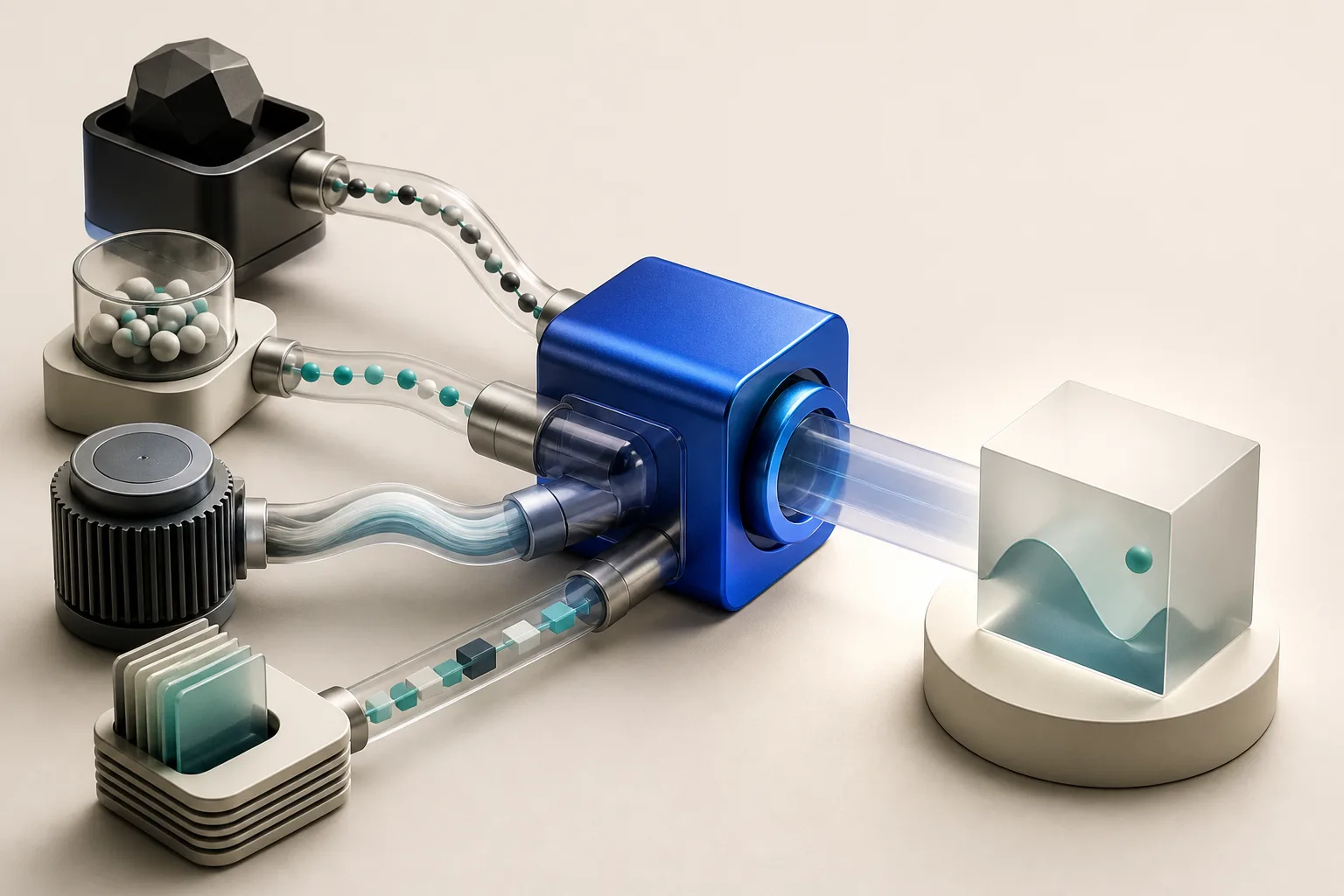
Agent harnesses need a product backend layer
Agent harnesses can already write code, edit files, run tools, generate artifacts, and complete multi-step work. Turning that capability into a product backend is a different job.
Each harness has its own assumptions about sessions, streaming, files, artifacts, sandboxing, permissions, and traces.
By unified interface, we mean a managed API that lets a product invoke multiple agent harnesses through stable task, run, session, streaming, file, artifact, and renderer contracts without owning the underlying runtime infrastructure.
HarnessRouter standardizes that layer behind one stable product API.
Interface
HarnessRouter turns agent harnesses into a product backend
Your product sends a task through one API. HarnessRouter runs the selected harness in an isolated sandbox. Your app receives structured, renderable output.
This is the difference between using an agent and making agent work a product capability.
A chat response is not enough for product teams. They need stable state, progress, files, artifacts, and renderable results.
- Task: the product-level work request.
- Run: the execution attempt and lifecycle.
- Session: continuity for follow-up work.
- Streaming: status and progress for the frontend.
- File: inputs and generated outputs.
- Artifact: durable results the product can store, show, and bill for.
- Renderer: a contract for displaying completed work.
Infrastructure
A unified API is only the beginning
Changing the selected harness is the easy part. The hard part is preserving stable product contracts while harnesses, models, sessions, files, permissions, and execution environments change underneath them.
HarnessRouter operates the production backend: long-running tasks, run lifecycle, session continuity, streaming progress, file upload, artifact registration, renderer contracts, sandboxed execution, retries, permissions, cost caps, traces, concurrent execution, and failure recovery.
Once multiple teams or end users depend on that layer, it is no longer a wrapper. It is infrastructure.
HarnessRouter gives developers that infrastructure as an API.
Routing
One API across Codex, Claude Code, Hermes, Pi, and future harnesses
HarnessRouter sits above agent harnesses. It does not replace Codex, Claude Code, Hermes, or the upcoming Pi integration. It gives developers one interface above them.
That means product teams can avoid coupling their application directly to one harness, one model, or one vendor. They can start with the harness that works today, then compare, switch, or add new harnesses over time without rebuilding their product backend.
The best harness for a coding task may not be the best harness for a document workflow. The best model for quality may not be the best model for cost. The best setup this month may not be the best setup next month.
HarnessRouter makes that choice configurable, traceable, and measurable.
Optimization
The control plane tests model × harness combinations
Routing is the visible benefit. The deeper value is continuous testing and tracing across model × harness combinations.
For the same task, two model × harness combinations can both produce successful runs while having very different cost and latency. In one HarnessRouter benchmark, two configurations with successful runs differed by about 475x in credits per task.
That is not a small optimization. It is an infrastructure decision.
Without tracing, teams guess. With HarnessRouter, teams can compare combinations over time and choose based on success rate, output quality, latency, cost, failure mode, and task type.
Scale
Serverless sandboxes for concurrent agent runs
Agent harnesses need execution environments. They need a place to read files, run tools, call services, produce outputs, and recover from failures.
For product teams, sandboxing is not optional. It is the backend.
Building and scaling that sandbox fleet is a major part of the hidden cost of agent infrastructure. HarnessRouter provides serverless sandboxes for concurrent agent runs, so developers do not have to own the execution layer themselves.
That matters when usage grows from one internal demo to many users sending tasks in parallel.
Developer API
Built for developers building AI products
HarnessRouter is not a workplace chat app, a prompt playground, a model gateway, or a single agent runtime.
HarnessRouter is the world's first unified interface for agent harnesses, built for developers who want to expose agent-powered work inside their own products.
A product needs more than a transcript. It needs stable objects. That is why the API contract matters.
Enterprises
Vendor-agnostic agent infrastructure needs more than model routing
Enterprises are moving toward vendor-agnostic AI infrastructure. They do not want every team locked into one model, one harness, or one provider.
HarnessRouter gives enterprises a shared control layer for agent harnesses. Teams can ask which harness should run a task, which model gives the best cost/performance tradeoff, which workflows need approvals, which runs failed, and which combination should become the default.
Market signal
QM validated one application of the layer
After HarnessRouter launched its developer API, QM brought part of the same architecture to company workspaces.
QM packages multiple harnesses and models behind a shared workspace interface with Slack, web, company rooms, personal scopes, shared memory, permissions, crons, and internal workflows.
HarnessRouter provides the broader infrastructure layer. Developers can use its API and control plane to build QM-like workspaces, coding products, research systems, document workflows, and other agent applications with sandboxed execution, structured artifacts, tracing, evaluation, routing, and production scaling.
The difference is scope: QM is one application of the multi-harness architecture. HarnessRouter is the infrastructure for building that application and many others.
That is independent validation of the same conclusion: products need a unified layer above agent harnesses.
Future
The future is a unified interface above agent harnesses
The next generation of AI products will not be built on one model or one harness. They will need a stable layer above many harnesses.
That layer will decide where work runs, how it is traced, how artifacts are returned, how costs are controlled, how sandboxes scale, and how teams compare model × harness combinations over time.
Models generate tokens. Harnesses complete work. HarnessRouter is the unified interface and control plane for the work layer.
Build once across Codex, Claude Code, Hermes, Pi, and DeepSeek Harness. Test every model × harness combination. Route each task to the best setup. Scale without rebuilding the agent backend.
Run your first agent task.
Start with one API for agent tasks, sessions, streaming, files, artifacts, serverless sandboxes, and model × harness traces.
Run your first task