
Harness Memory
Agents that remember.
Every session, every harness.
Every agent that needs one gets its own memory, automatically. No memory service to wire up, and no new integration when the harness changes.
01Built in
A memory of its own, made with the agent.
The engine is picked for what the agent does, and the console shows why.
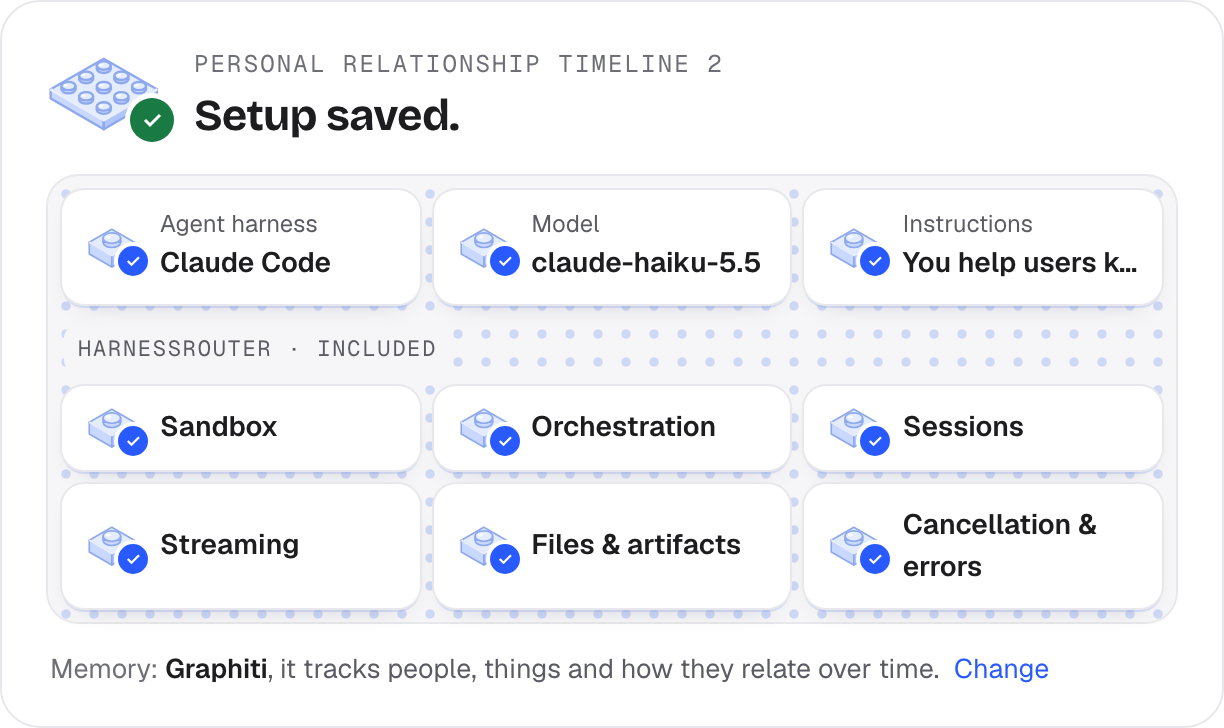
- Chosen for the work
- One that only transforms what it is given, like a translator, gets none.
- Always adjustable
- The Change link picks another engine, or none.
02In every session
It remembers in every later session.
Loaded when a session starts, used through tools during each turn, and recorded when the turn ends. The engine keeps what mattered, and the agent recalls it before it answers.
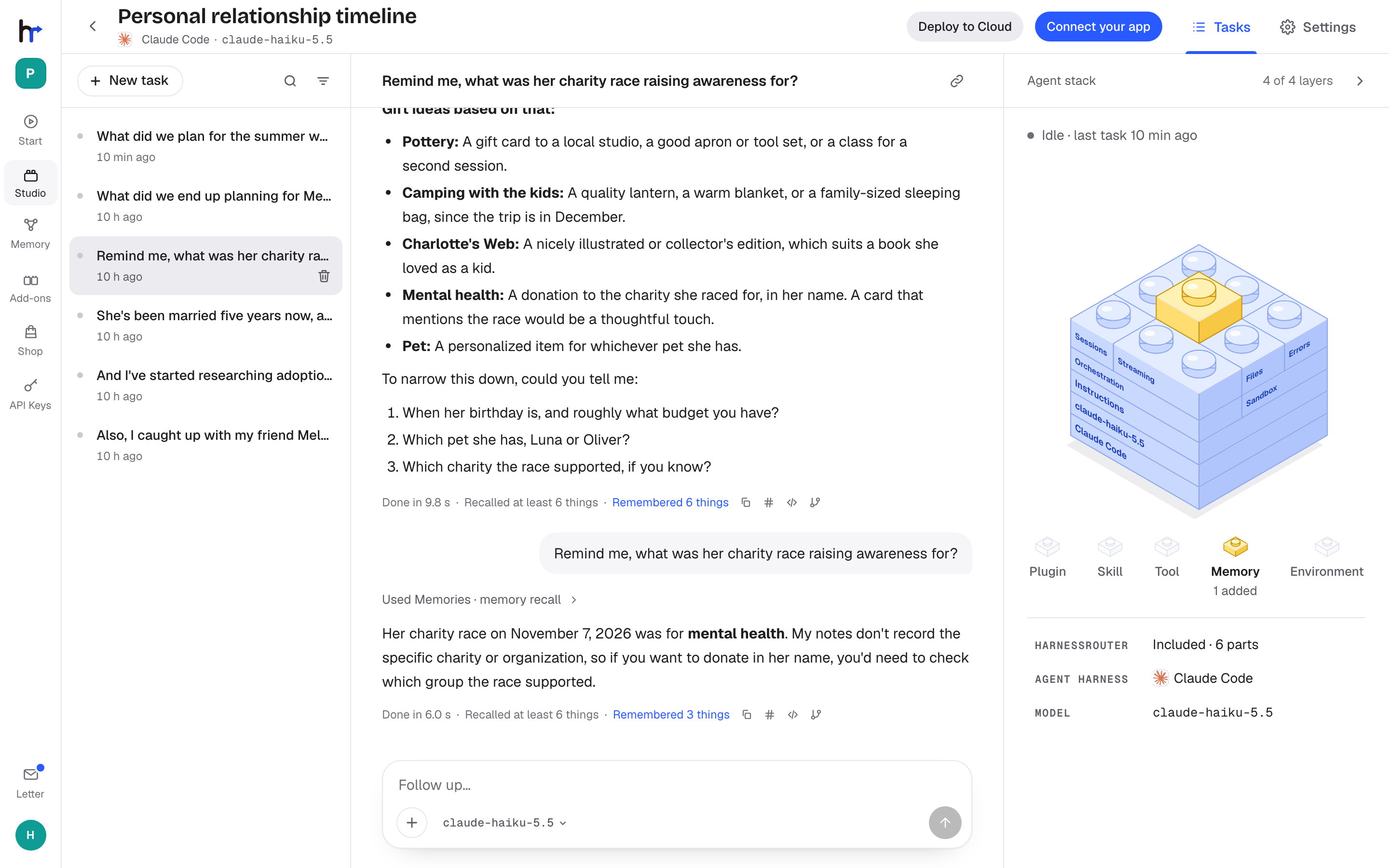
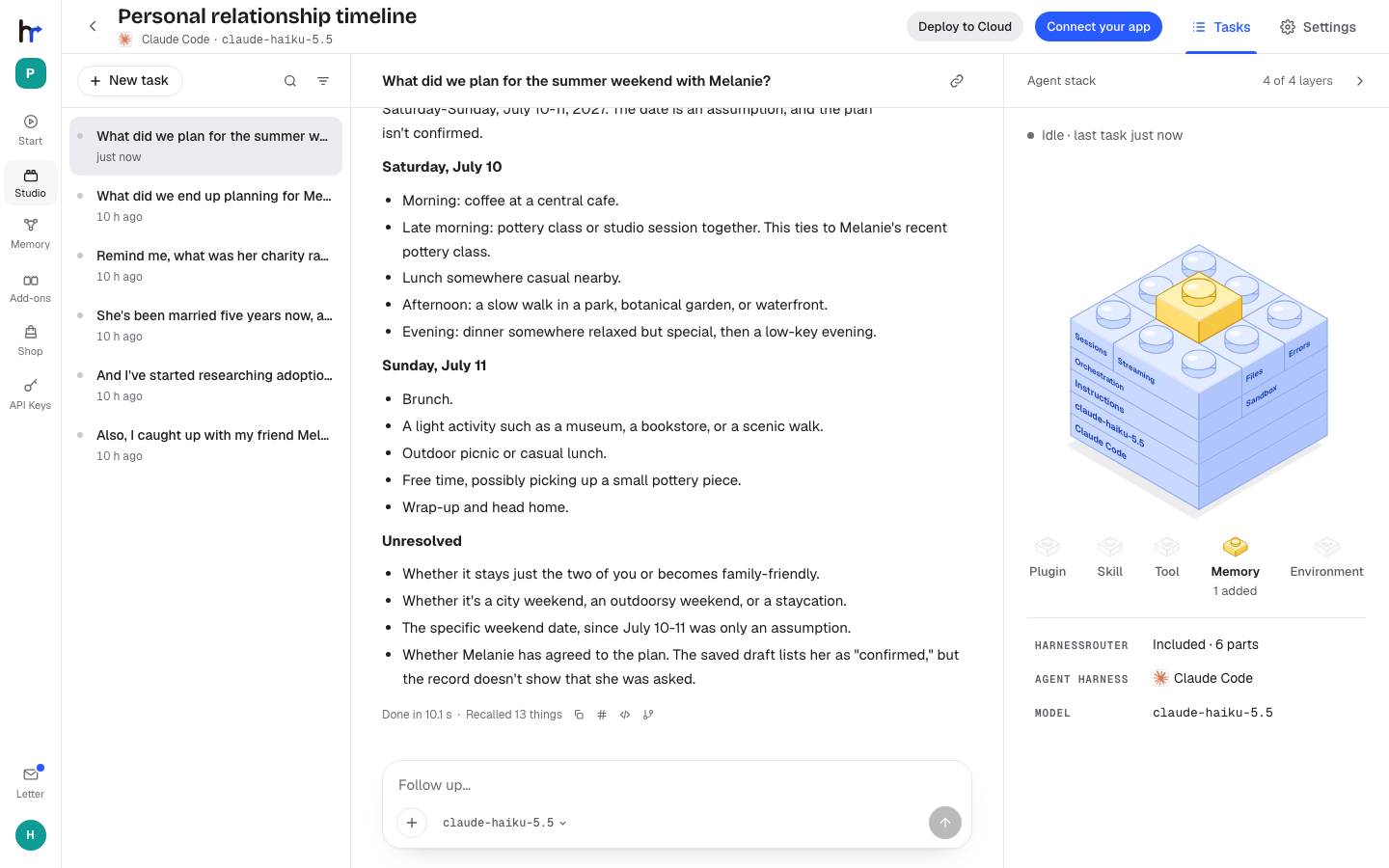
A later task: the agent recalls before it answers
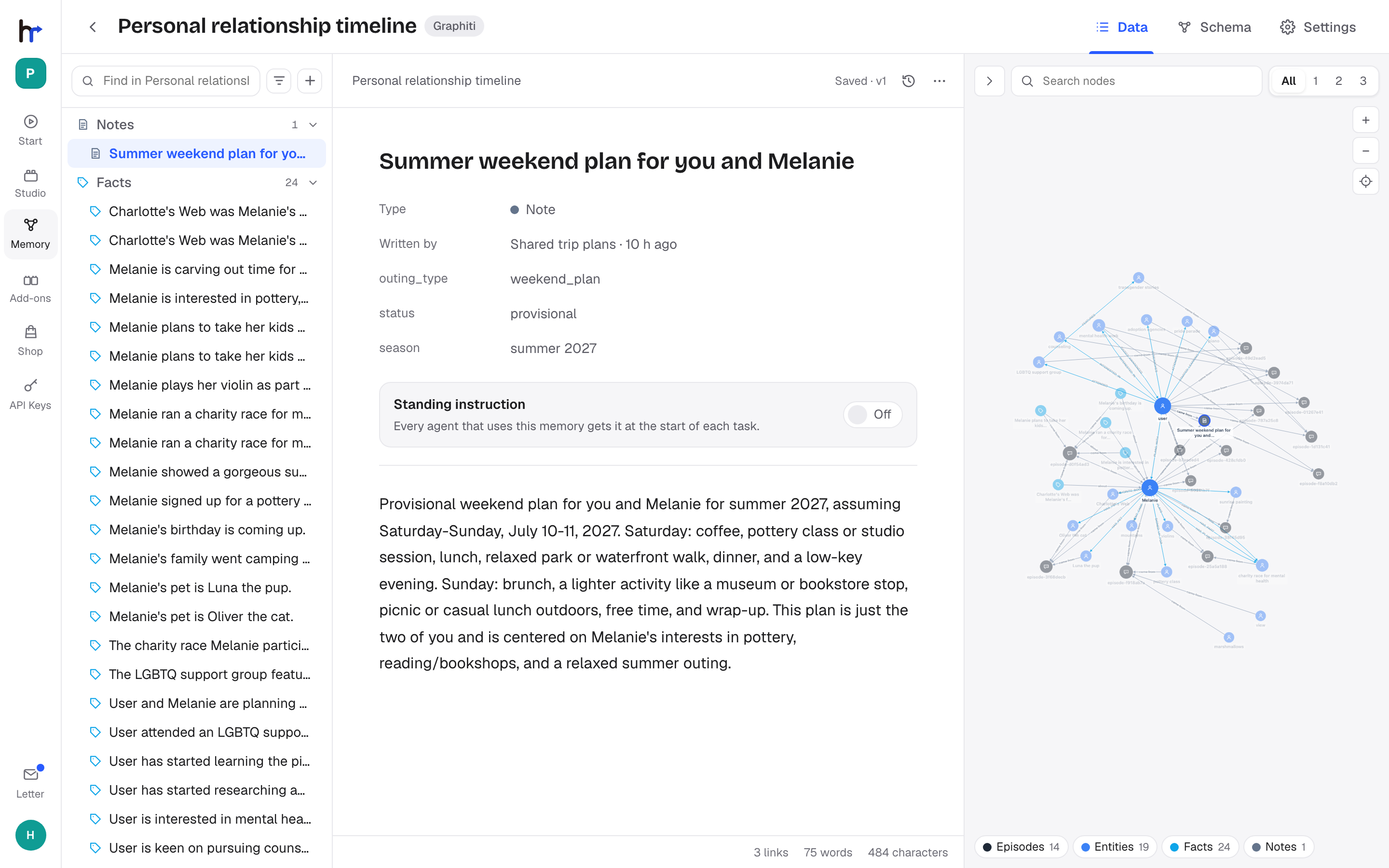
Data: its records and how they relate, live as it works
03Across harnesses
One memory, more than one harness.
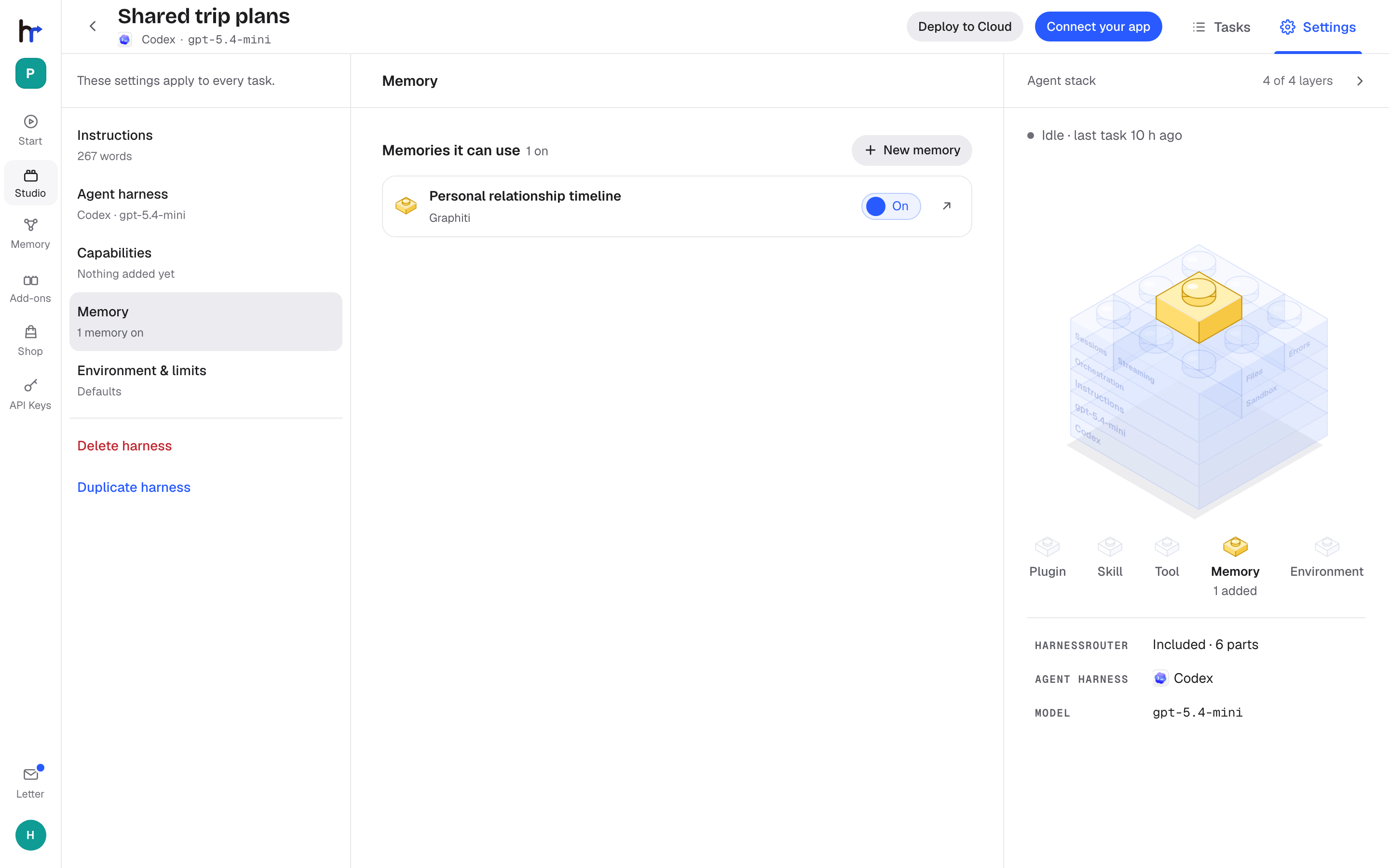
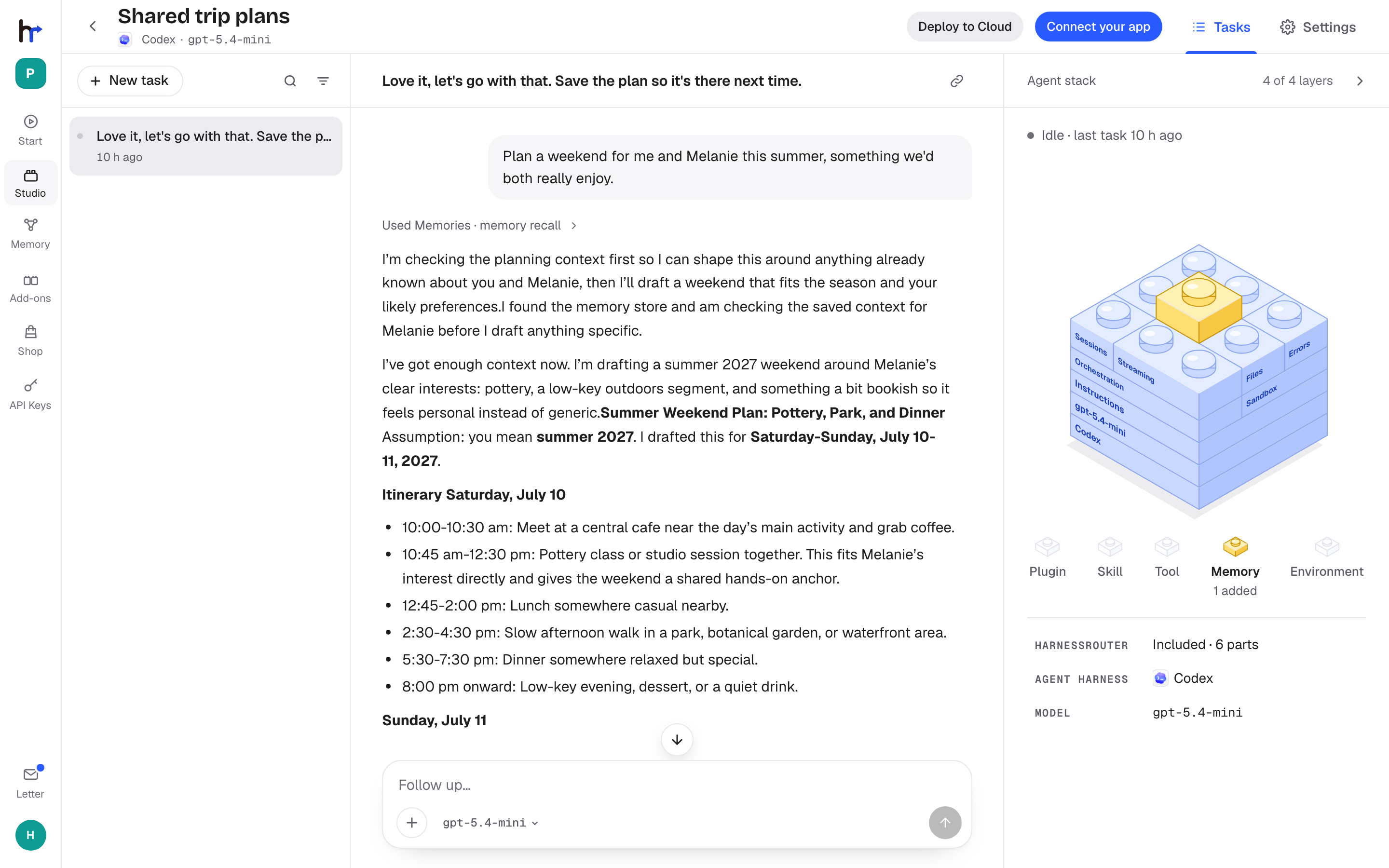
Agents on different harnesses can share one memory. In the demo, a Claude Code agent and a Codex agent use the same memory.
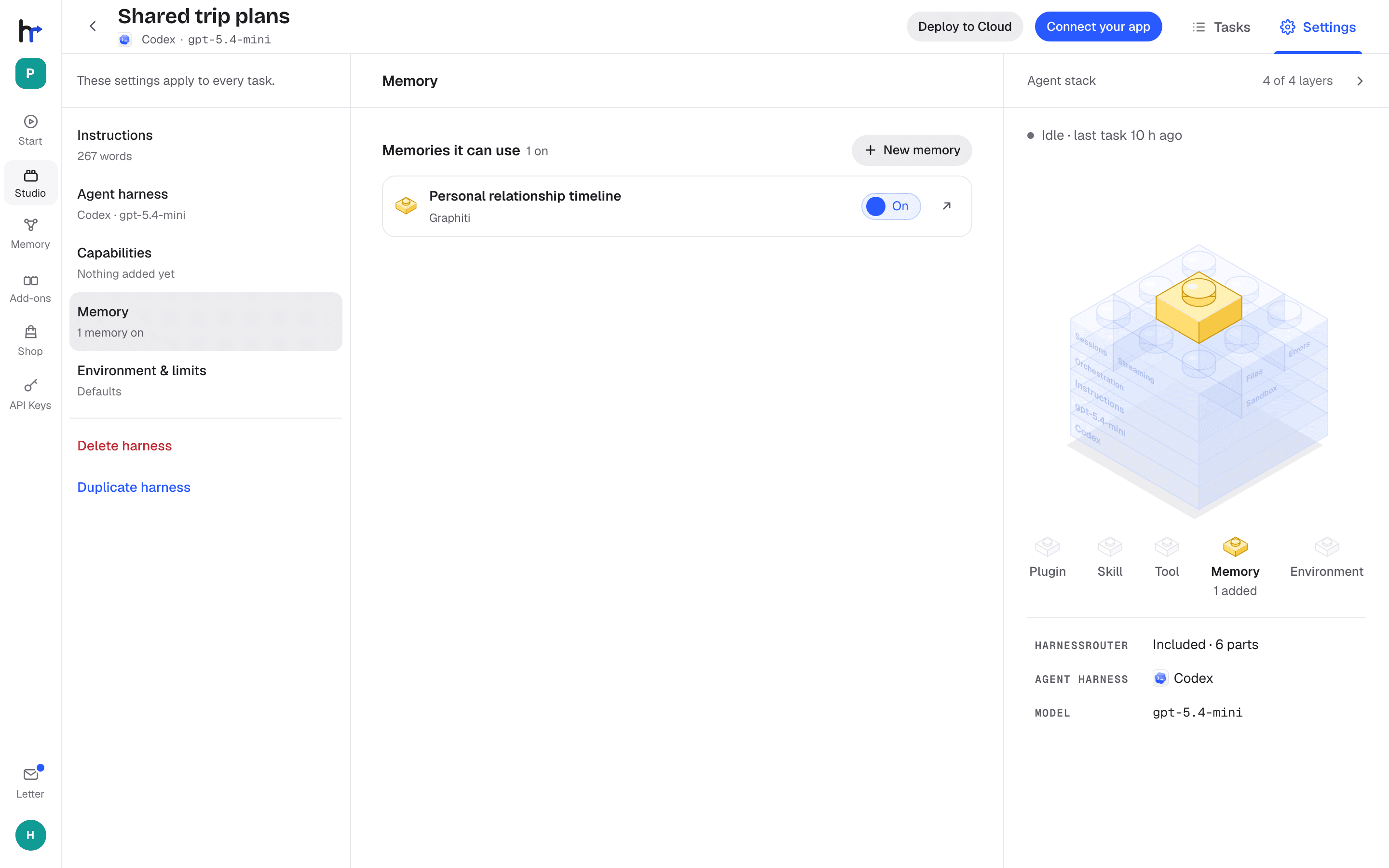
1Switch the memory on for an agent on Codex.
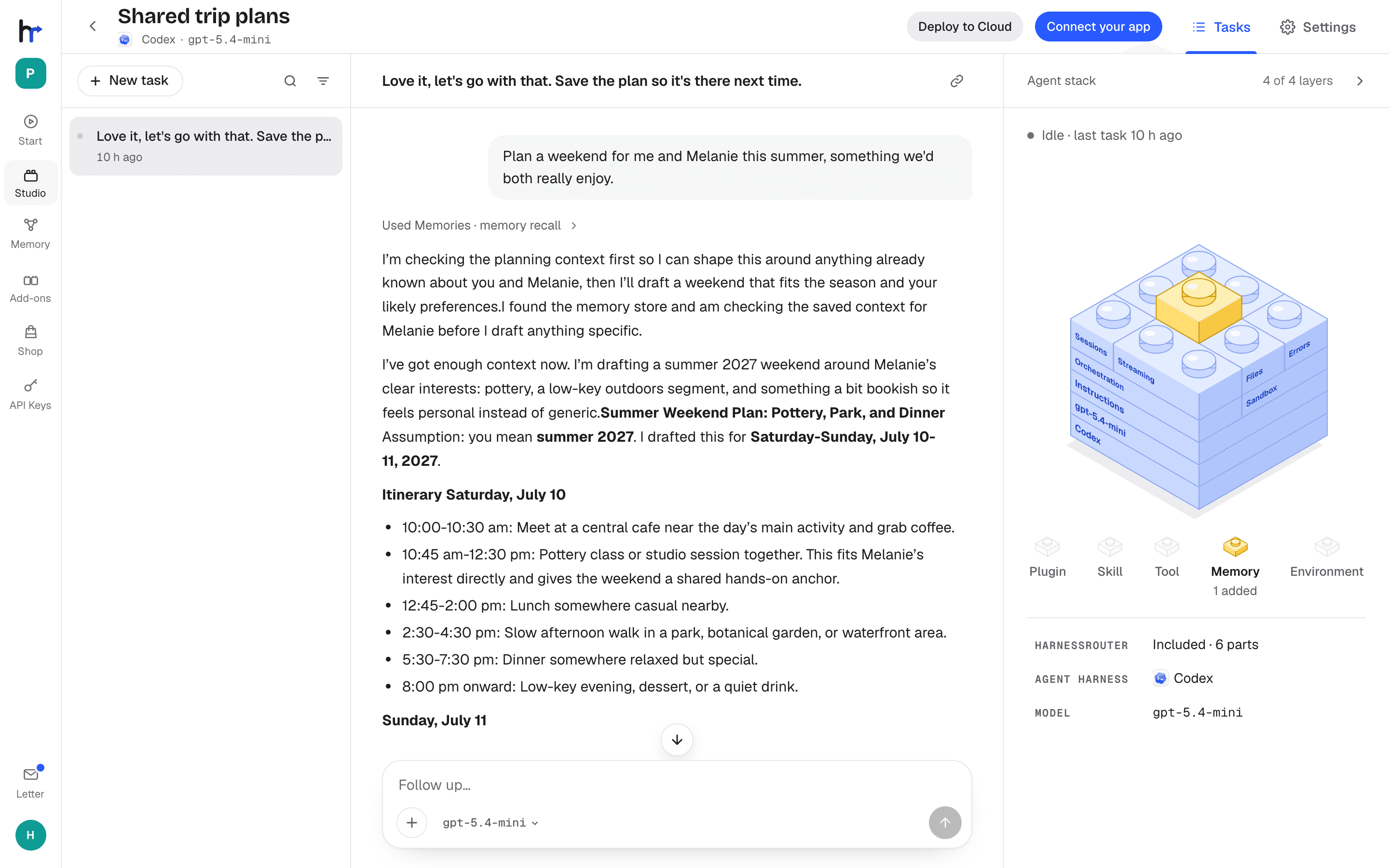
2The Codex agent saves a plan.
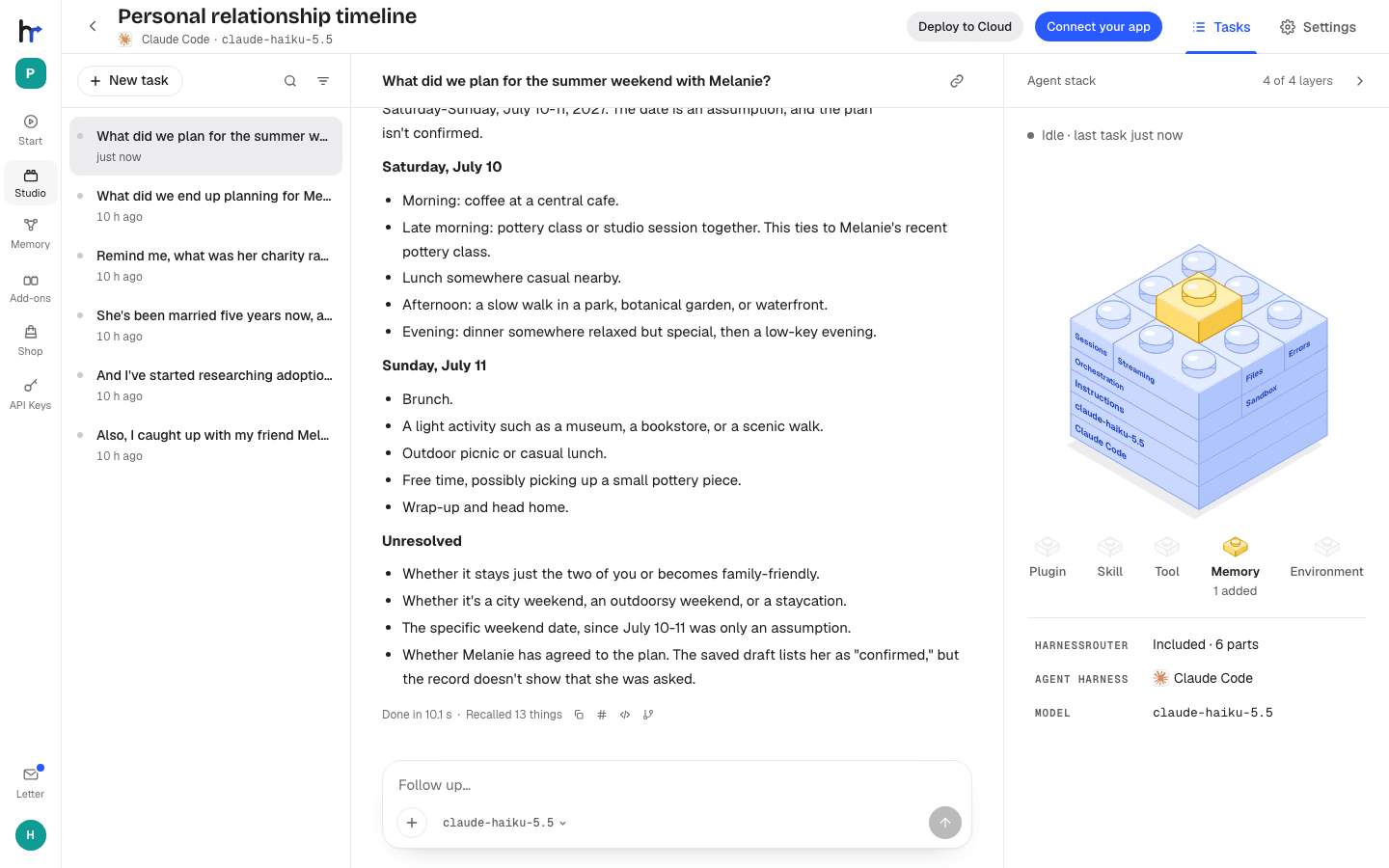
3The Claude Code agent recalls it in a new session.
04Safe by default
Built for agents that face users.
When an agent serves many people, each person gets a memory of their own, named on the task. Their records are kept apart from everyone else's, and one person's memory can be erased on its own.
- Recalled memory is data, not instructions
- It reaches the agent fenced off from its instructions, with who wrote it.
- Agents forget. Only people erase
- Erase is never offered to an agent as a tool.
- Access per memory
- People and agents are members alike, and access is granted per memory.
- See it live
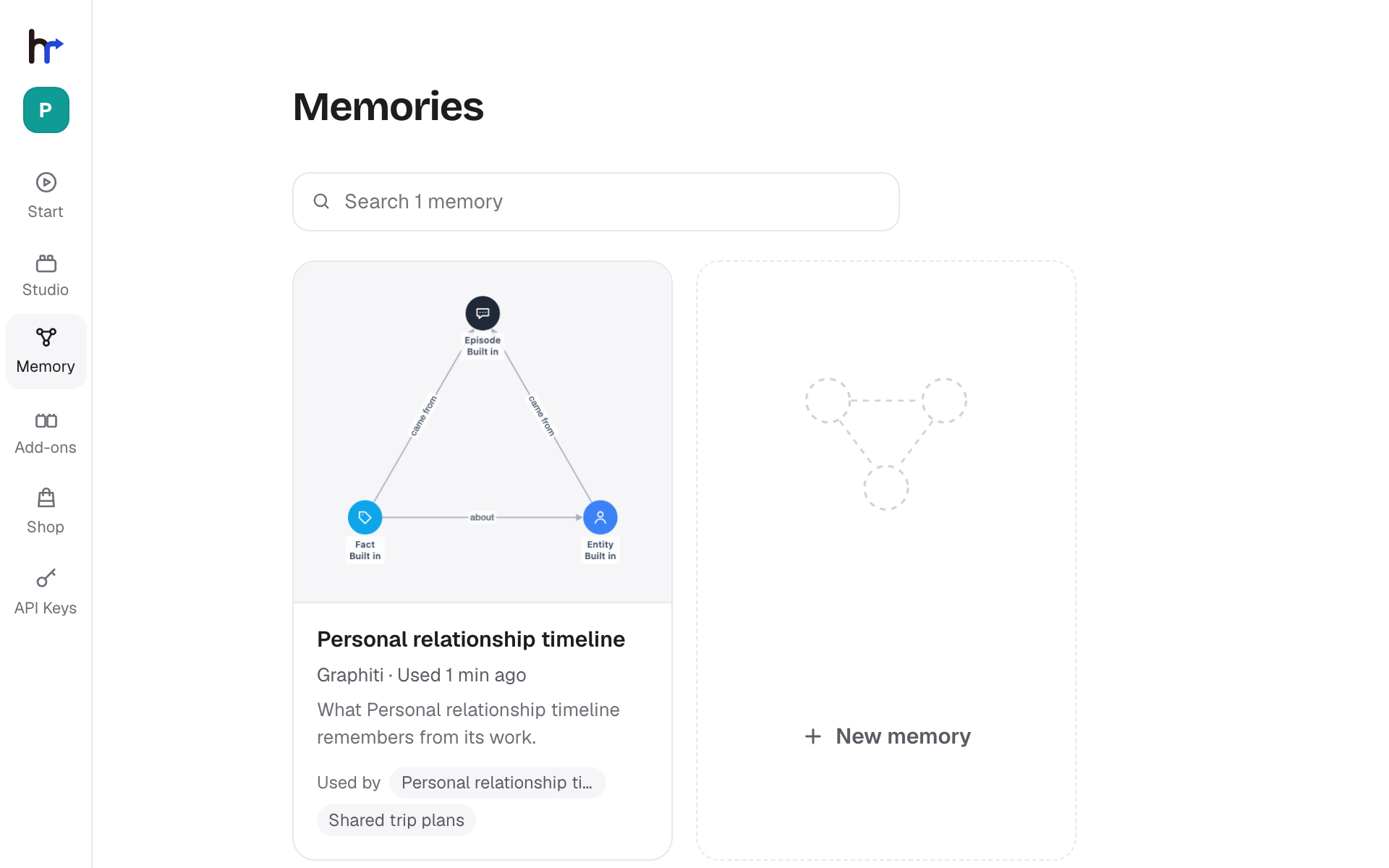
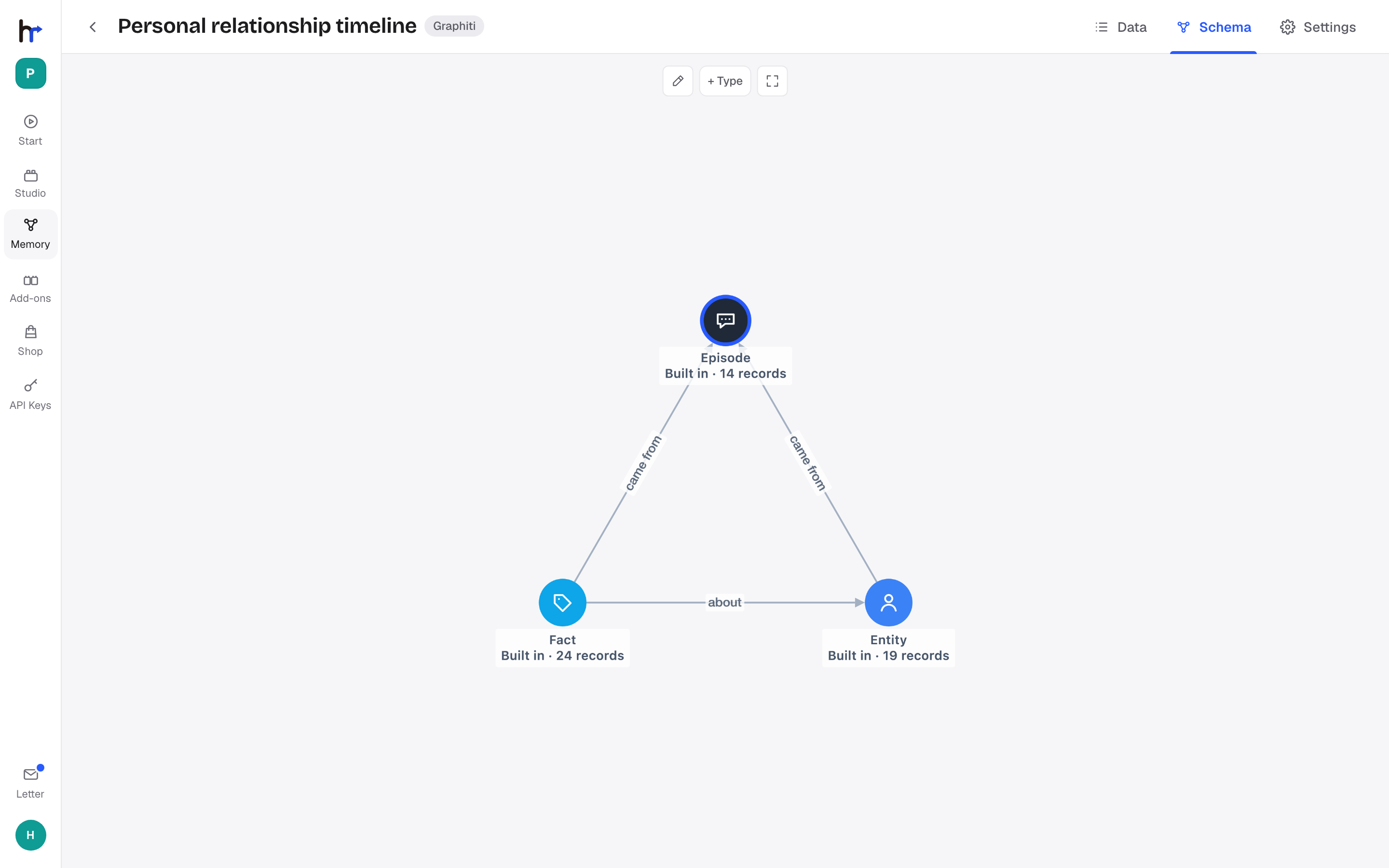
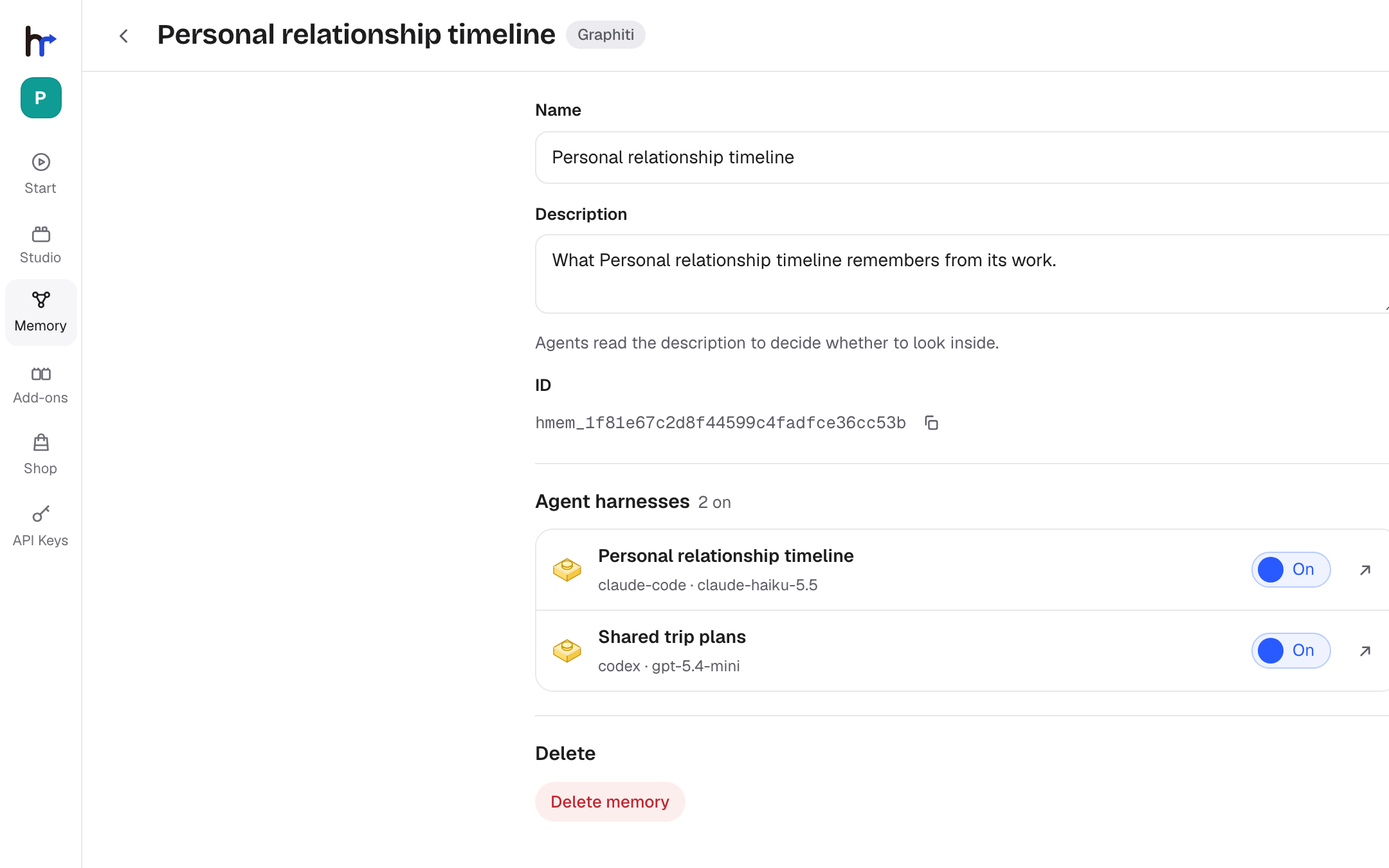
- The Memory page has Data, Schema, and Settings tabs, and you can see, edit, or delete what an agent remembers.
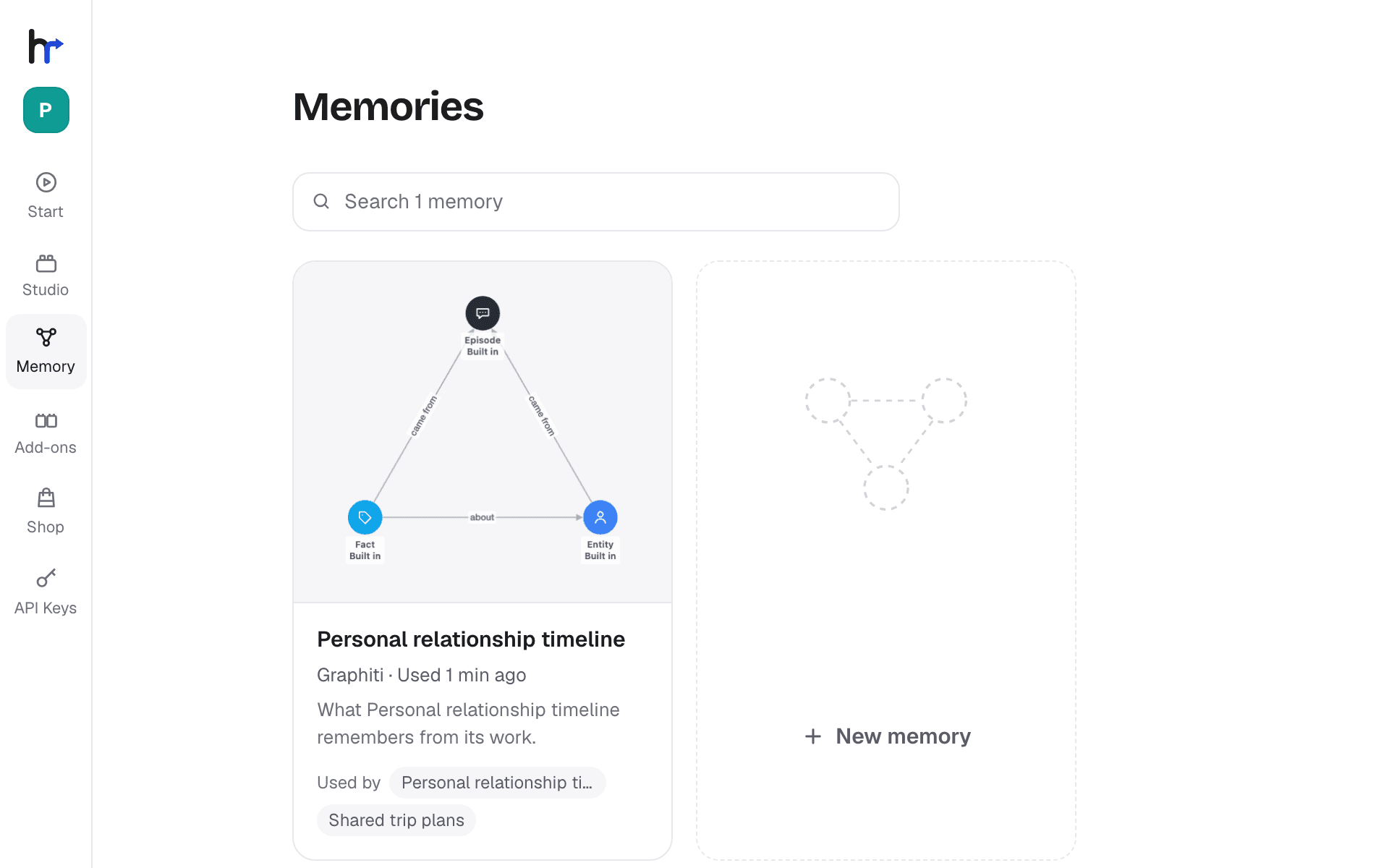
Memory: each memory, its engine, and the agents that use it
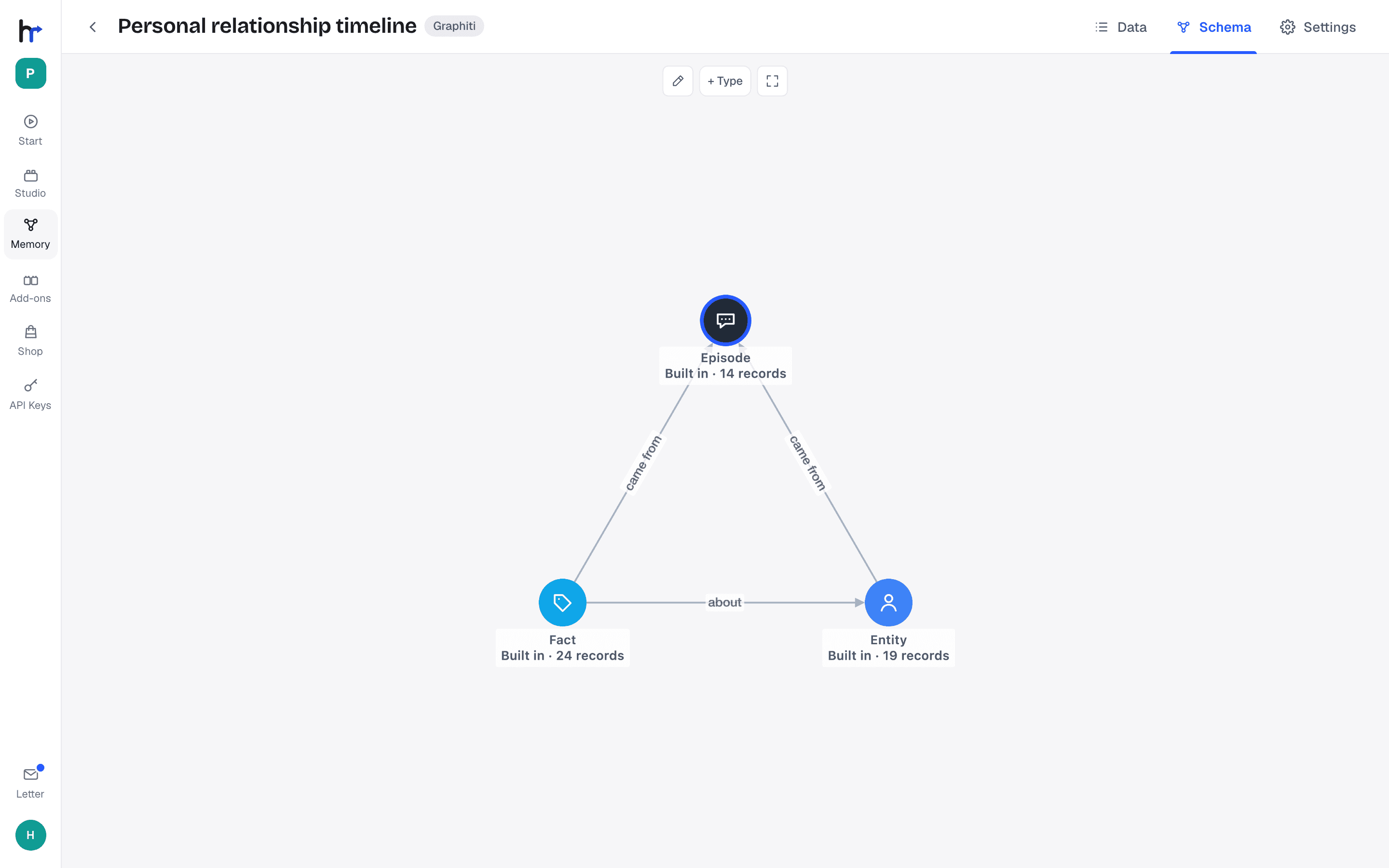
Schema: the kinds of record its engine keeps
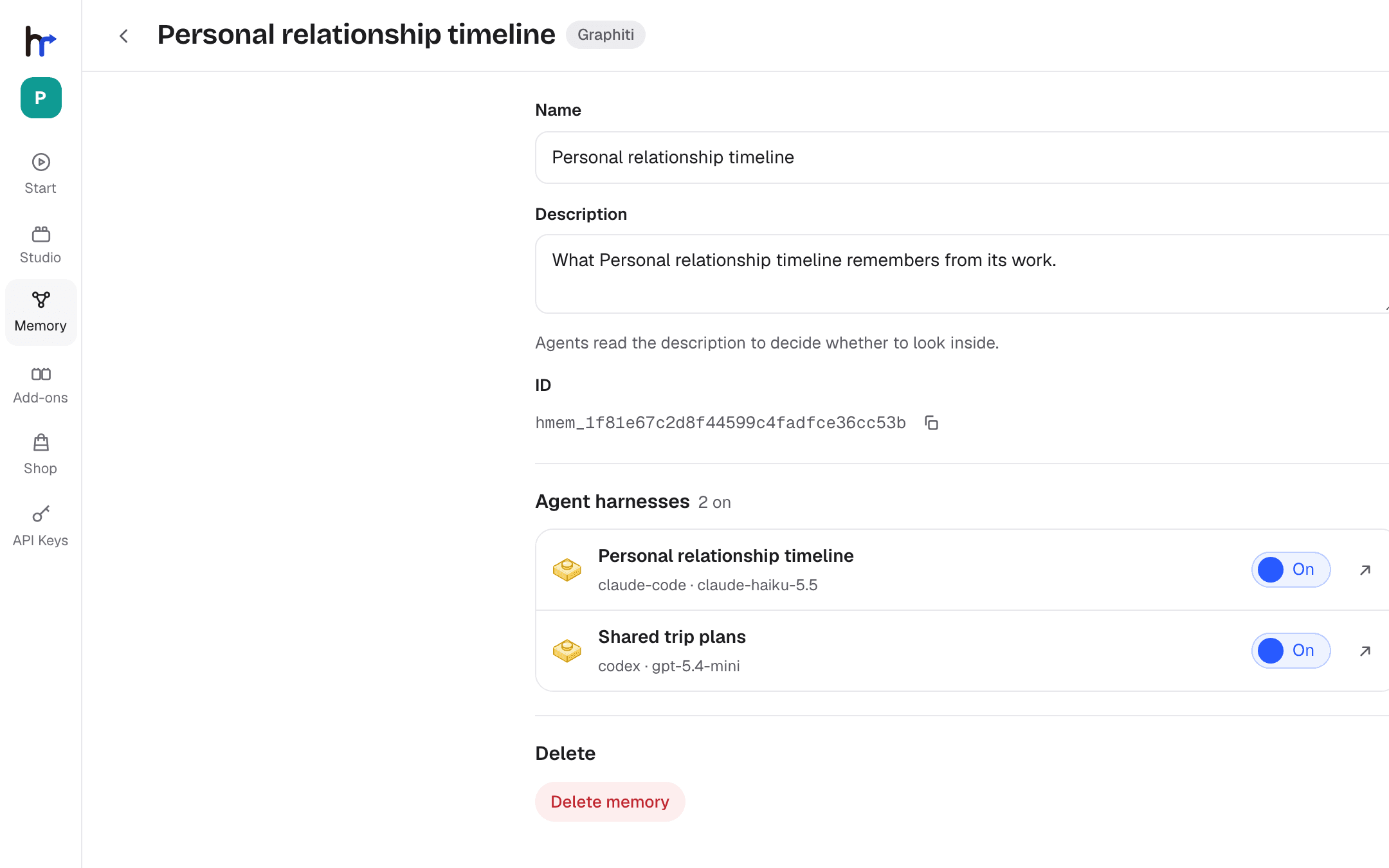
Settings: the agents on this memory
05Engines
Four memory engines. More coming.
Each keeps memory its own way: short facts, a graph over time, consolidated facts, or files.
- Mem0Apache-2.0Short facts drawn from what was said.
- GraphitiApache-2.0A graph of things and how they relate, over time.
- HindsightMITFacts and the things they involve, consolidated in the background.
- ReMeApache-2.0Markdown files in folders, with links.
- Bring a memory serviceRead how ›Any memory service can plug in as a provider through the protocol.
06Protocol
The Harness Memory Protocol.
The Memories chapter of the Unified Harness Protocol: an open definition of what a memory is, who may reach it, and how an agent uses it.
- The providerits own store and intelligencehow memory is derived and kept
- UHP Memoriesthis chapterwhat a memory is, who may reach it, when a harness calls it
- MCPthe tools an agent holdshow an agent calls it in a turn
- A named container
- A memory holds records: facts, notes, procedures, and the people and things they are about.
- A tree, like folders
- Access is granted per memory and inherited below.
- Tools for agents
- Agents search and add to their memories with tools.
- Optional
- A server advertises it with the memories capability.
07Start
Give agents a memory. It's built in.
Read the Harness Memory Protocol ›Watch the demo ›Run it on self-hosted infrastructure ›