

The paradox
Same model, different product, different result
Ask a chat product to fix a failing test and you get a plausible suggestion. Ask an agent product running the same model and you get the test found, the file edited, the suite rerun, and a passing result reported back. Same intelligence. Different outcome.
The conclusion is easy to draw and easy to get wrong. People try a model in one product, form a judgment about the model, then meet the same model somewhere else behaving like a different species. The model did not change. The system around it did.
That system has a name: the agent harness. A model is the reasoning engine. An agent harness is everything wrapped around it that turns reasoning into finished work: the execution loop, tools, context management, permissions, and environment. Models generate tokens. Harnesses complete work.
This post is about what that surrounding system actually consists of, why you can feel each part of it from the outside, and what that means for how you judge AI products and build your own.
The picture
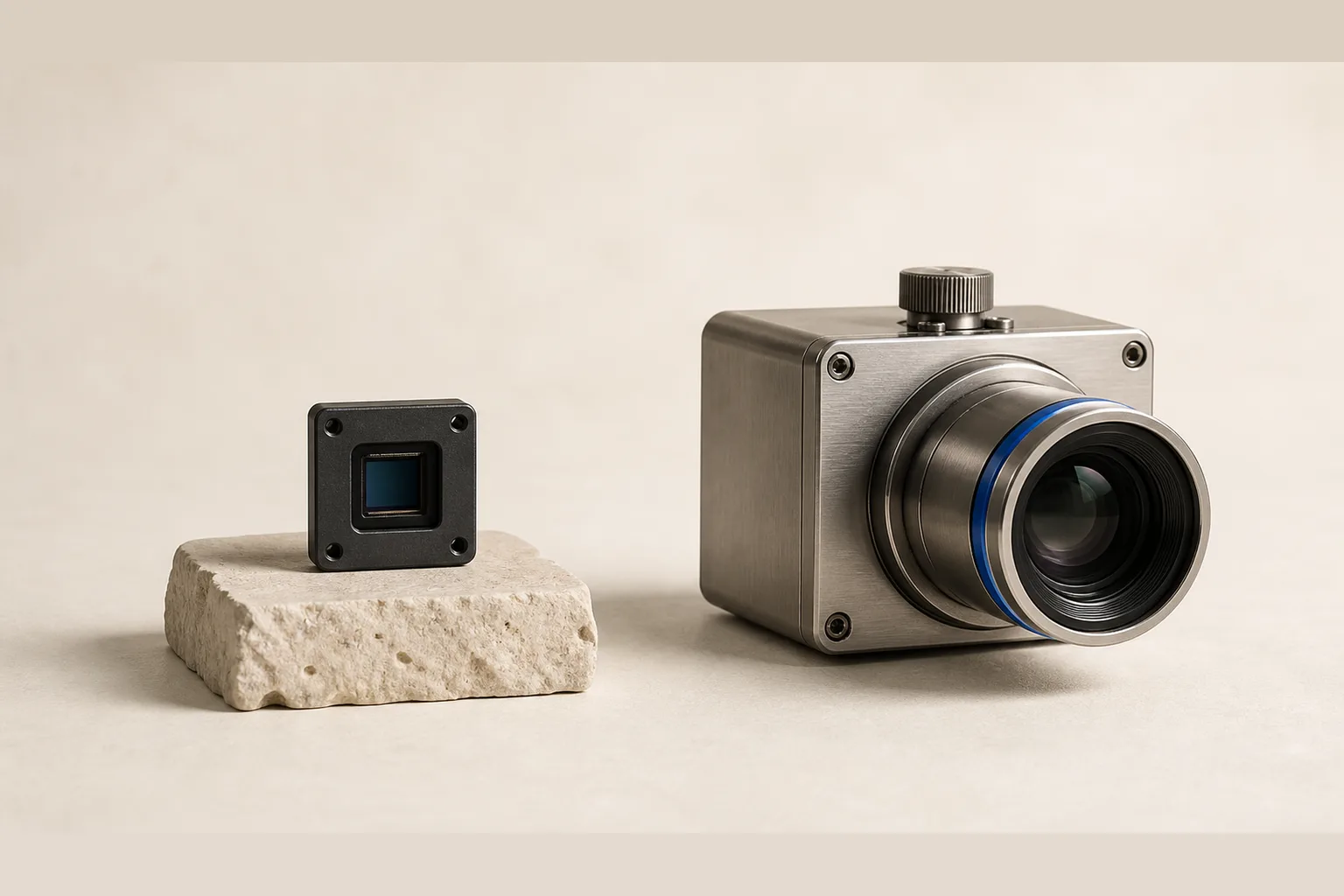
The same sensor in two different cameras
Imagine two cameras built around the same image sensor. One pairs it with a fixed lens and a shutter button. The other adds interchangeable lenses, autofocus, stabilization, exposure control, and focus confirmation.
The sensor matters; it sets real limits on what can be captured. But the photograph you actually get depends just as much on everything that helps the sensor receive the right light, adjust to conditions, and confirm the shot. Nobody would compare those two cameras by reading the sensor label alone.
Products built on AI models work the same way. The model is the sensor. The harness is the rest of the camera. Judging a product by the model name is reading the spec sheet of one component and ignoring the machine it lives in.
Anatomy
Seven parts of a harness you can feel from outside
You do not need access to a product's source code to sense its harness. Each component shows up directly in the experience:
- Context: what the system brings into the current decision. In one product you paste code across three messages; in another the product reads the relevant files itself before answering.
- Tools: what the model can actually do. One product describes an edit it cannot make; another searches the repository, applies the change, and runs the tests.
- State: what survives between steps. One product needs you to restate what was already tried; another carries the failed attempt forward in its task state and does not repeat it.
- The execution loop: whether the system can act, observe the result, and react. One product stops at a suggestion; another runs the test, reads the failure, revises, and tries again.
- Guardrails: what the product may do without asking. Well-designed permissions are not just limits; they are what makes autonomous action safe enough to allow at all.
- Verification: whether the result was checked. One product says the fix should work; another reran the suite and shows it passing.
- Stopping conditions: how the work ends. One product ends when the text sounds finished; another ends when the task is verifiably done, or when a defined blocker needs your input.
Run down that list for any AI product you use and the mystery of "why does it feel so capable here and so limited there" mostly dissolves. You are feeling the harness.
Side by side
One request, two very different experiences
Take one concrete request: find the cause of this failing test, fix it, and confirm the fix.
In a plain chat product, you paste the test and the error. The model reasons well and proposes a change. You apply it yourself, run the test yourself, and come back with the new error. Three round trips later the test passes. The intelligence was real, but you were the context pipeline, the tools, the loop, and the verifier.
In an agent product running the same model, the product opens the workspace, reads the failing test and the implementation, makes the edit, reruns the suite, reads the new failure, adjusts, reruns, and reports a passing result with the diff attached. The same reasoning engine, surrounded by machinery that lets it finish the job.
Neither interface is universally better. For explanation, brainstorming, or tightly supervised work, direct conversation is often exactly right. The point is narrower: when the same model produces those two experiences, the difference you felt was never the model.
The unit
Capability is a property of the whole configuration
None of this means models stopped mattering. Models differ in reasoning quality, speed, reliability, and cost, and the harness cannot conjure ability the model does not have. A camera body cannot fix a broken sensor.
But the result you get is a property of the whole configuration: this model, in this harness, with these settings, on this task. Two products with the same model name may also differ in model version, system instructions, and defaults, which is one more reason the label on the box explains less than it seems to.
That is why the question "which model is best" has quietly become the wrong unit of comparison. The unit that produces results, and the unit worth evaluating, is the model and harness together.
For buyers
How to evaluate an AI product without being fooled by the label
Evaluate task-first, not model-first. Give the product a representative piece of your real work and watch the harness, not the eloquence:
- What could it access on its own, and what did you have to feed it?
- What actions could it take directly, and where did it hand work back to you?
- When something failed, did it notice and recover, or did you carry the loop?
- Was the result verified by a check, or asserted with confidence?
- Did it know when it was done, and did it stop cleanly or trail off?
A product that scores well on those questions with a modest model will often deliver more finished work than a stronger model surrounded by none of this machinery.
For builders
Make the surrounding system deliberate
If you are building on models, the anatomy above is your design checklist, in order: curate what enters the context rather than dumping everything in; expose a small set of well-described tools rather than every capability you have; decide what state persists across steps; give the loop room to act and observe, with recovery paths for failure; set permissions that make autonomy safe instead of forbidden; require verification proportionate to the stakes; and define completion explicitly, so the system knows the difference between sounding done and being done.
Teams that do this deliberately ship products that feel smarter than their model. Teams that skip it ship products that make excellent models feel ordinary. The harness is where that difference is engineered, which also means it is a place where real product differentiation still lives.
The practice
Compare complete systems, not labels
Once you see capability as a property of the configuration, the practical question becomes: how do you compare configurations on your own work, rather than on reputation?
HarnessRouter is the world's first unified interface for agent harnesses: one API that runs twenty-six complete harnesses, each in its own sandbox, with the same tasks, sessions, streaming, and artifacts across all of them. The harness and the model are request parameters, so the same task can run across configurations and the results can be compared like for like.
That turns this post's argument into a workflow: stop asking which model is best, run your task across model and harness combinations, and let the measured result pick. For the market story behind the layers, see why developers swap the model and keep the harness; for choosing models systematically, see model evals.
FAQ
Same model, different results: FAQ
Why does the same AI model give different results in different products?
Because the model operates inside different systems. Each product supplies different context, tools, memory, permissions, execution loops, and checks around the model, and may also run a different model version with different settings and instructions. The result is a property of that whole configuration, not of the model alone.
Is GPT or Claude better in one product than another?
A product can make any model look more or less capable by changing what it can see and do. A fair comparison runs the same task through each complete product and examines access, actions, recovery, and verification, rather than inferring performance from the model name.
Do AI models still matter if the harness matters this much?
Yes. Models differ meaningfully in reasoning, speed, reliability, and cost, and a harness cannot create ability the model lacks. The narrower point is that model quality alone does not determine whether a product completes real work; the harness decides how much of the model's ability becomes results.
What is an AI harness?
An agent harness is the system wrapped around a model that turns reasoning into finished work: the execution loop, tools, context management, permissions, and environment. The model generates the next decision; the harness organizes how that decision meets the real task.
How do I evaluate AI products beyond the model label?
Task-first: give each product a representative piece of your real work and observe what it could access on its own, what actions it took directly, how it recovered from failure, whether results were verified, and how cleanly it finished. A capable harness often turns a modest model into more finished work than a stronger model achieves without one.
Judge configurations, not labels.
Run Codex, Claude Code, Hermes, Pi, DeepSeek Harness, OpenCode, Qwen Code, and Cline with the same tasks, sessions, streaming, files, and artifacts, and let measured results pick your setup.
Start building free